
Twenty years, and then ten.
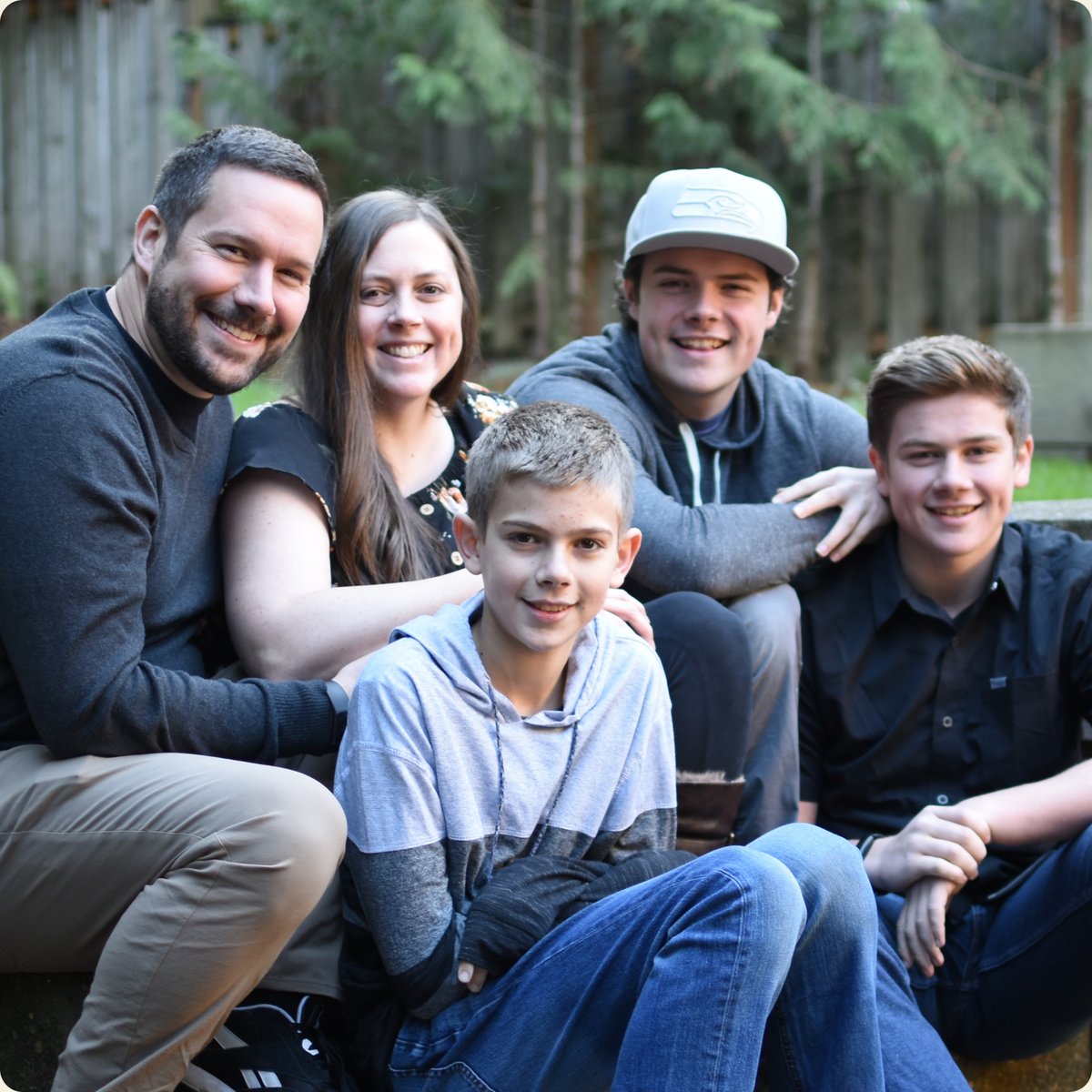
I have been leading Bible studies and shepherding people since I was fifteen. I became a pastor at eighteen. I'm forty-one now, so that is essentially my whole adult life.
Starting around 2014, God spent ten years taking down every pillar that held up the way I had always done ministry. I was already wrestling with my own failures and character when the losses started arriving, and then they did not stop.
- My mom was diagnosed with a rare, aggressive cancer.
- My brother's baby was born very premature and spent a long stretch in the NICU.
- I found my wife's father dead in his house. We had been driving an hour and a half each way to care for him for years, and the thing I feared most is exactly what happened.
- A twenty-two-year-old woman in our church — like a sister to me, three months from finishing her nursing degree — died suddenly of a heart condition nobody knew she had.
- My parents' health forced them into retirement.
- The youth pastor who followed them was a dear friend. He took the middle school and high school groups to a river for the day, and drowned in front of the kids.
- A leader I had poured years into turned on me and left.
- And then my brother Matt — my closest friend and ministry partner of twenty years — was called to help plant a church elsewhere. We prayed about it for a year, and sent him out at the start of 2020.
A youth ministry we had built for more than twenty years was gone within three months of that drowning. No kids. No teenagers. Nothing. When something like that happens you stop asking what you are doing wrong and start asking what God is saying, because you cannot explain it any other way.
Learning to pastor a camera lens.
Then came COVID and the live streams. I have never been trained to pastor people through a video camera. I am used to looking at human souls — I have looked people in the eye for decades — and now I was looking at a lens, putting thirty hours into producing one service, while all of us, me included, were worn thin by masks and meetings and hard decisions.
My own administrator told me she did not watch the live streams because it looked like I was putting on a performance. People told me they flipped to another church's stream because they preferred that music or that teaching. And I realized we had become a channel. I felt like a failure at something I was working myself to death to do.
It also showed me something about my own ministry. If a pandemic could unsettle the main way I was discipling people, then I needed to equip people for a kind of transformation that would keep going no matter what happened to the building or the service.
And then what He did ask: prepare the church to weather a culture that may change drastically. Equip and empower everybody to make disciples among the lost. Go find the gaps — the people nobody is reaching, and the least of these.
All around us, spiritual hunger kept climbing, and so many people were far from any church. Those are the people I felt God pointing at.
The cherry tree.
Through 2020 and 2021 I spent hours praying and discerning in my office, and there was a cherry tree outside my window. It was so loaded that the branches sagged under the clusters. I prayed the same prayer over that tree more times than I can count.
In 2023 we started the transition, and it took two years. I cast the vision: we are going to equip everybody here to make disciples, and we are going to make disciples. We lost most of the church. I let go of my church salary, because I wanted to model stepping out in faith for the people who stayed.
I want to be honest about how we ended up in house churches, because people assume it was ideology. It wasn't. I was willing to keep a Sunday morning service and run a hybrid. In the end there were not enough volunteers to do both, and when the board voted, I voted to keep Sunday mornings — and I lost the vote. So simple house churches happened by necessity. I am not at war with the brick-and-mortar church. It is the bride of Christ, and John 17 is a command. I will partner with anyone.
"I'll go to the county jail."
We had reduced our definition of a disciple to three things: someone who hears, obeys and shares Jesus. So everything has to come back to hearing, obeying and sharing — which means every training ends by asking what you are actually going to do.
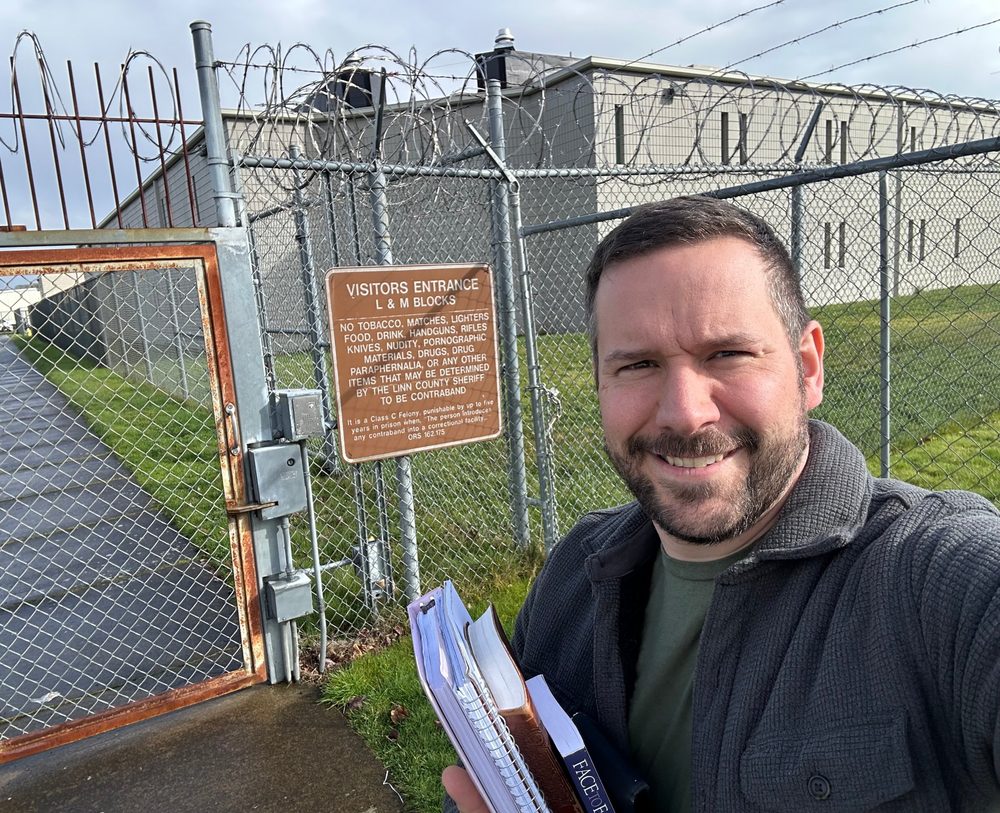
One day in coaching we were in Matthew 25, in the part about the least of these, and one of the lines is about visiting people in prison. My "I will" statement was simple: I'll go to the local county jail and get set up for visitation.
They found out I had an ordination and put me on special clergy visitation. It took two months to be approved. They background-checked me and told me everything I could not do, and told me nothing about what I could. Then nothing happened for ten months.
Then a family in our church called. There had been a terrible tragedy, and a mother was booked into that jail, and they were told nobody could see her. Except my name was on the clergy list. They had to let me in. I was sitting with her within twenty-four hours.
What God did with one yes.
That was three years ago, and I have met with her nearly every week since. Most of the time my job was to shut up and listen. She would talk ninety-five percent of the time and I would say a few things. We worked through the Word, taking thoughts captive, deliverance, twelve steps — one thing after another. She put everything into practice immediately.
Then the guards started asking questions. Her cell block holds the most serious charges in that jail, and one day an officer stopped and asked what was wrong with them — because every other block was yelling and fighting and throwing things, and hers was calm, studying the Bible, praying for each other, making prayer bookmarks. A few weeks later another officer told her that women in the other blocks were asking to be transferred in. They had never seen that happen.
Then she told me there was a man who had been booked a few weeks earlier that she could not get off her mind, and she thought I was supposed to visit him. He said yes. He was my first yes on the men's side, and he was the door.
He introduced me to someone. Six weeks later I got my first request from a man I had never met. Then one every four weeks. Then every three. Then every two. Then every single week, until I could no longer meet with everyone asking for me.
One of those men told me about someone he called Pastor John — a guy who spent all night on his knees and would not let the other men curse. I felt the Spirit say to request him.
John is a Catholic and a trained MMA fighter who had spent time in an Orthodox monastery. He had calluses on his knees from praying on concrete. He understood consecration and grieving his own sin better than most Protestants I know. He had the monk part. So I taught him the missionary part: how to have a spiritual conversation, the priesthood of all believers, Ephesians 4, equipping the saints for the work of ministry. He absorbed all of it.
A man stopped at his cell and said he had been watching him for days: everyone else was gambling or watching TV, and John was praying — and just now there had been light around him. Tell me how to follow Jesus. Another man, who would tell anyone who mentioned Jesus exactly where to go, asked John to pray for his wife: sick, about to lose the only job keeping the family afloat, the family living in a car. John prayed all night. The next morning the man got off the phone with her, gave John a bear hug, and said she was completely healed. Tell me how to follow Jesus.
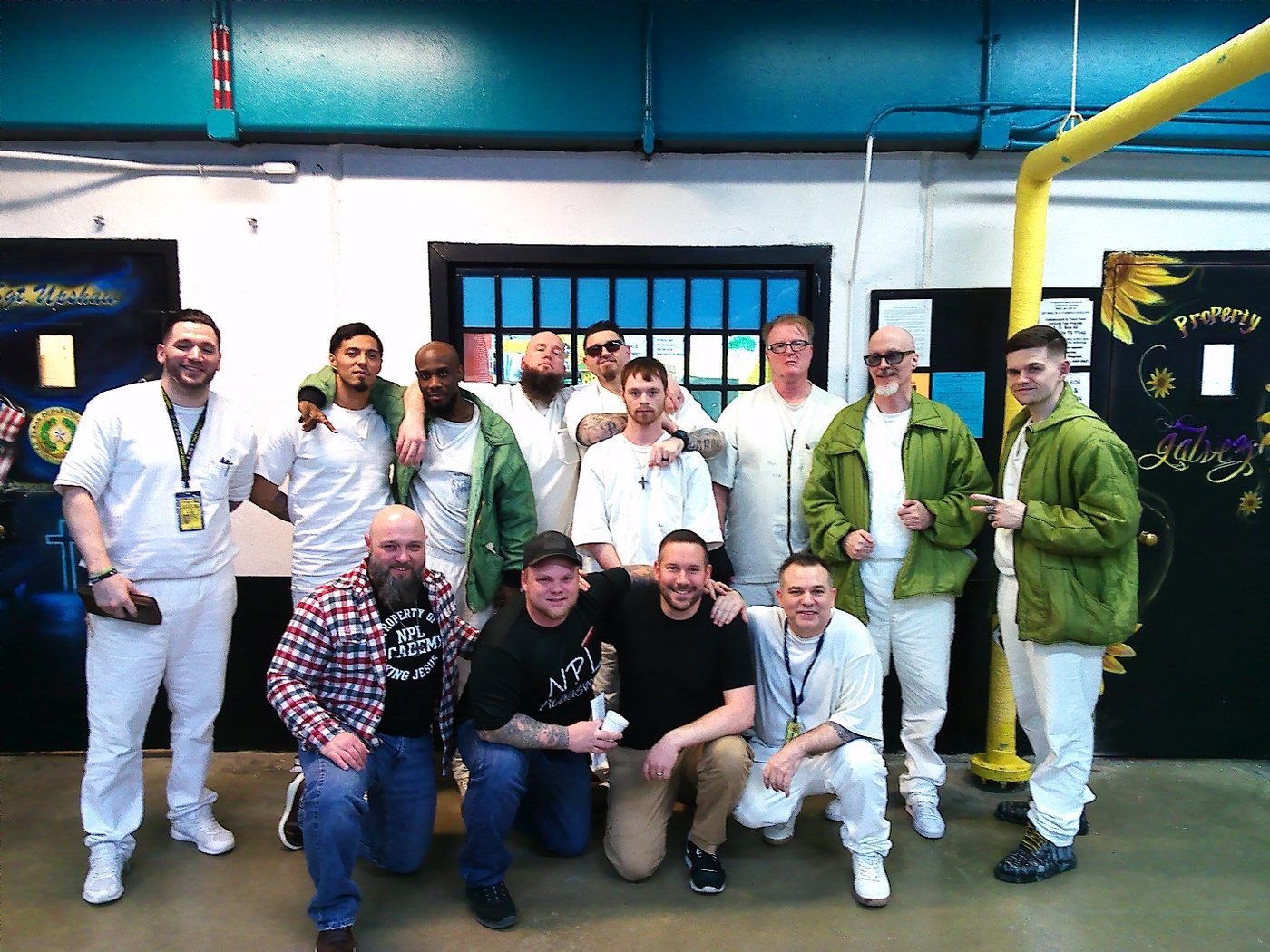
By the end John was training thirteen men in four groups. The jail let him baptize fifteen men at once — I have never heard of that being allowed there — and he commissioned them as a church. They named it the Church of Conviction, which for a room full of incarcerated men is a pun I still laugh about. They named it. It's theirs. I'm the coach.
Three days later he was transferred out. People asked what we were going to do about the leadership transition. It had already happened. John had been discipling his successor through the air vent between their cells — four or five hours a night, six-thirty until ten, for two months. The day John left, that man was ready to lead.
So I now meet with men who are my spiritual grandchildren. I discipled the man who led them to Jesus. For someone who spent years feeling fruitless, I do not have words for what that is like.
The job I didn't take.
By November 2025 I was out of money. I had given up my church salary two years earlier. Our cleaning company was the only thing keeping us in our house, and it was not sustainable. A friend offered me a job in sales and marketing, and I was going to take it.
My wife and I prayed and fasted for a week and a half. The answer was not ambiguous.
That job would have been a paycheck in two to four weeks. Support-raising might take months. I said no to it anyway. Within two weeks, two things happened.
A man who has been in and around the Oregon Department of Corrections for fifty years, a former superintendent who has been inside every prison in this state, heard the vision and said immediately that he wanted to help me get into the prisons. He is eighty years old.
And a mentor in Los Angeles asked whether I knew about the prophecy that there would be ten years of revival inside the Texas prison system, and that at the end of those ten years it would start exporting across the nation. I had never heard it. I had already said yes. It is year eleven.
Where it is now, in Oregon.
The people I discipled in that county jail were sentenced and sent all over Oregon, and they kept going. Through them, and through the people they reached, I'm now walking with men and women in seven or more Oregon facilities: Two Rivers in Umatilla, Snake River in Ontario, Warner Creek in Lakeview, Deer Ridge in Madras, the State Penitentiary in Salem, Coffee Creek, and the county jail where it began.
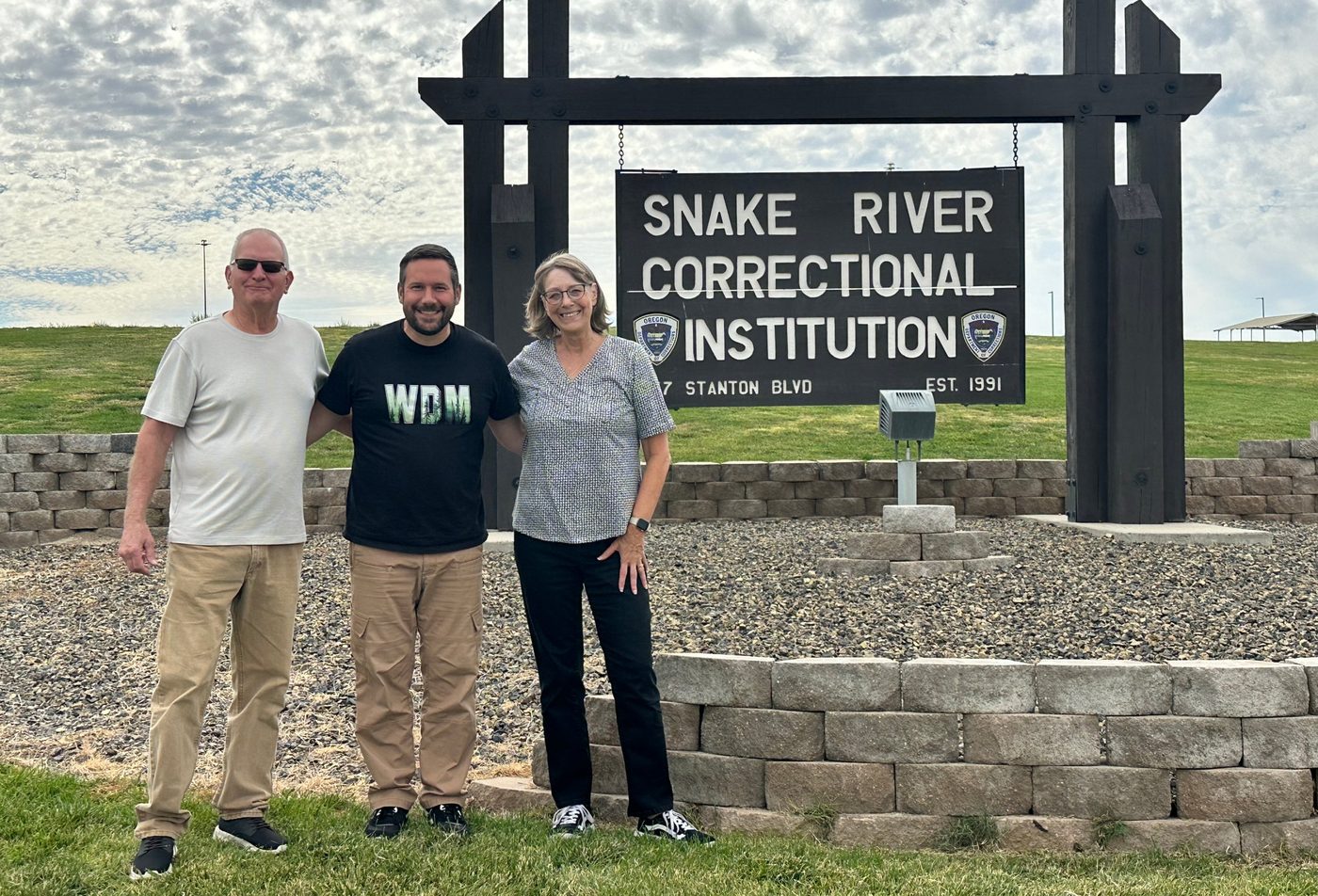
Most of that happens through letters, phone calls and video visits. In one week I can meet with people in four corners of the state from my kitchen table. In September I went inside Snake River, the largest prison in Oregon, for the first time. There are now inmate-led churches on both the men's and women's sides of that first jail, and an inmate-led fellowship called Prisoners of Hope at Two Rivers.
I cannot keep up, and I was never meant to. What I need is people. Men who will walk with a man inside. Women who will be a spiritual mother to a woman inside. People who will pray, and people who will give so it can keep growing.
And across the West Coast.
When God told me not to take that job, He didn't stop at Oregon. He said the prisons in Oregon, and across the West Coast. I didn't know what to do with the second half of that sentence. I'm starting to.
Tonight about 222,000 people from Washington, Oregon, California, Alaska and Hawaiʻi are behind bars, and more than half a million different people are booked into West Coast jails every year. Most of them are coming home. I want them coming home as disciple makers.
In California the 4-Fields training is already on the prison tablets, and men inside are working through it, with engagement at the Santa Clara and Sacramento county jails and at Corcoran. This year a workshop and a vision dinner brought together a small band of men who have walked the 4 Fields themselves and have a heart for the men and women inside. We are praying and planning together.
Washington sits right across the Columbia from where the fire is burning. In Alaska, many jails are a plane ride from anywhere, so letters, calls and video will carry most of it. And hundreds of Hawaiʻi men are serving their time in a prison in the Arizona desert, nearly 3,000 miles from home. A coach on the mainland could be family to one of them.
I don't yet know who God will raise up in those places. I know there is a John in every one of those jails and prisons, already praying, waiting for someone to find him and hand him a vision. I'm asking God for the people who will go find him. That's what the rest of this page is about: the people who pray, the people who give, and the people who go.